AI Storytelling in the Classroom: A Teacher's Guide

The Engagement Problem Every Teacher Knows
Every teacher has felt it - that moment when you look out at your class and realize half of them have checked out. You're teaching important material. You've prepared well. But the glazed eyes don't lie. The fundamental challenge of education has always been engagement. You can have the best curriculum in the world, but if students aren't engaged, they're not learning. And the traditional tools for engagement - worksheets, textbooks, even educational videos - are losing their effectiveness in a generation that's grown up with personalized, interactive digital experiences.
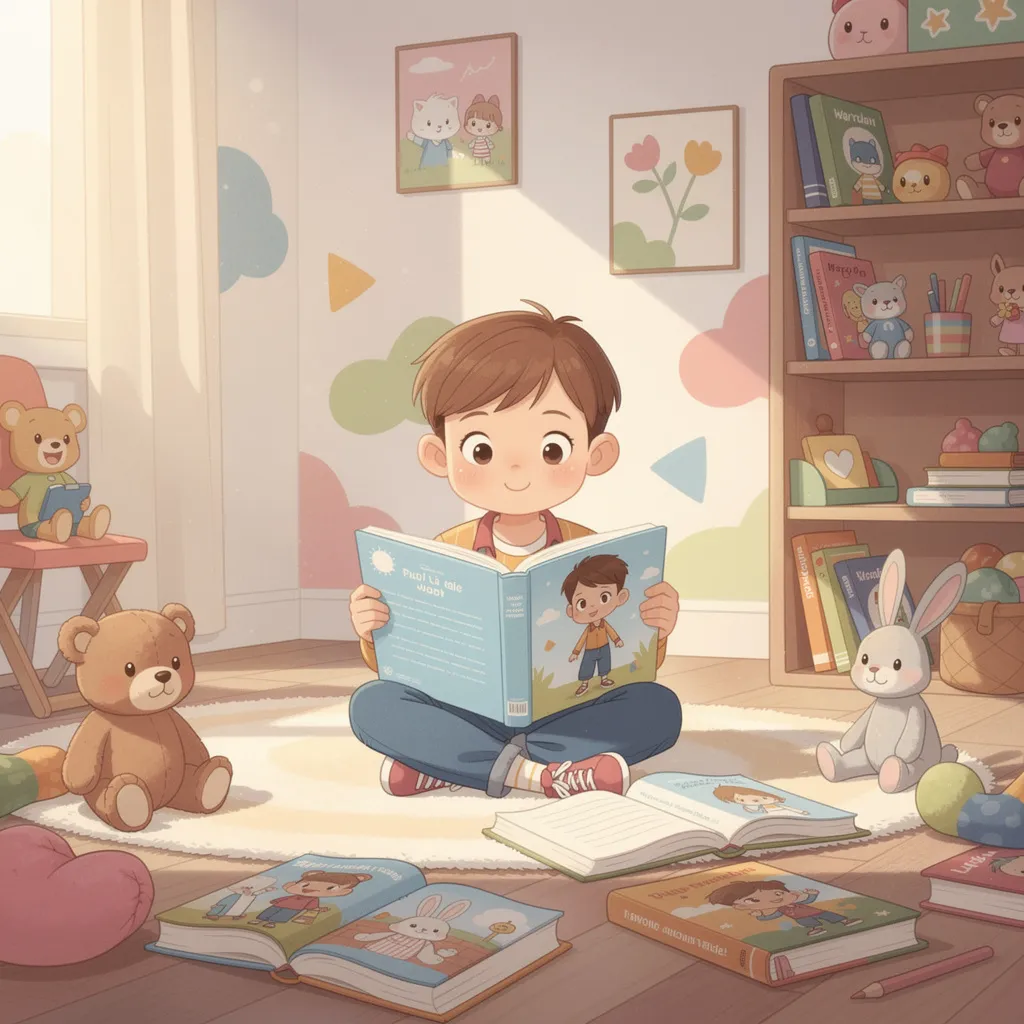
What if you could make every student the main character of the lesson? Not metaphorically - literally. What if your lesson about the water cycle featured a character who looks like each student, going on an adventure through the stages of evaporation, condensation, and precipitation? What if your history lesson about the American Revolution put each student in the shoes of a child their age living through that era? What if your social-emotional learning curriculum was delivered through personalized stories that addressed the specific dynamics in your classroom?
That's what AI storytelling tools like Fable make possible. And it's not a distant future scenario - it's something you can start doing in your classroom this week.
How AI Storytelling Works in an Educational Context
The core idea is simple: you describe a story that teaches a concept, and AI generates a fully illustrated, narrated story around that concept. The story features characters you customize - characters that can look like your students, live in settings similar to your school's community, and face challenges relevant to your curriculum. The result is a rich, multimedia learning experience that feels personal and engaging in a way that generic educational content simply can't match.
With Fable, the process takes under 5 minutes. You type a prompt like "A story about a curious student named Maria who shrinks down to the size of a cell and explores the human body, learning about organs and their functions along the way." Fable generates a multi-page illustrated story with that exact premise, complete with expressive narration and background music. Maria appears consistently across every illustration - the same character, the same look, page after page. The story teaches the science content while wrapping it in a narrative that makes it memorable.
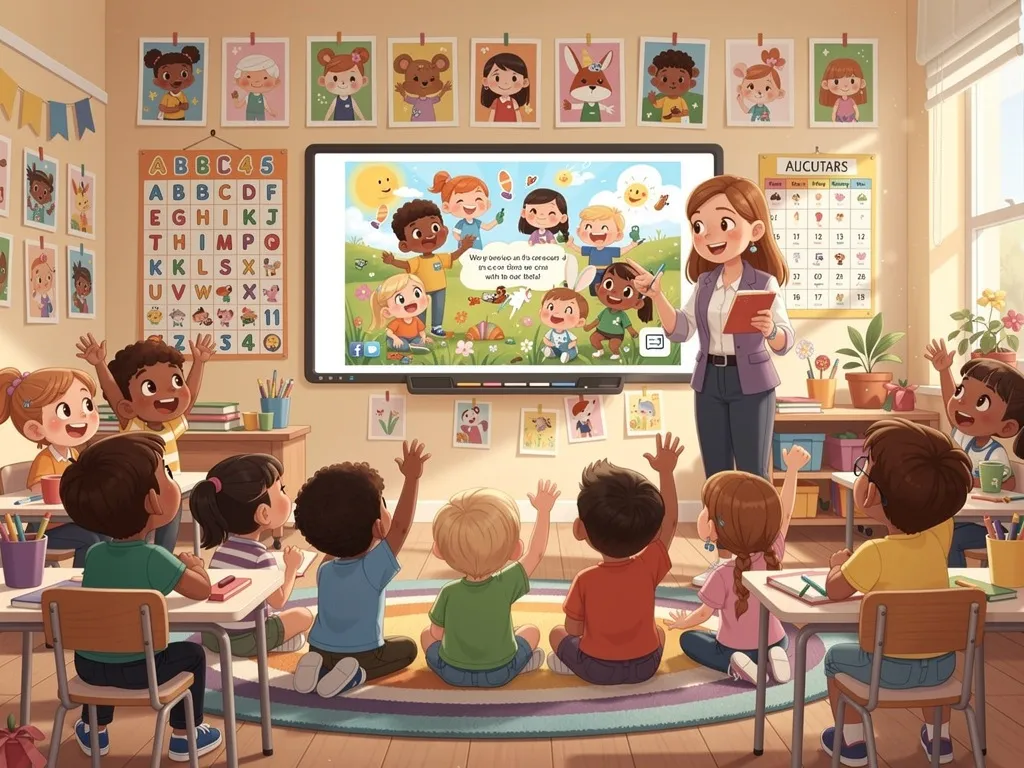
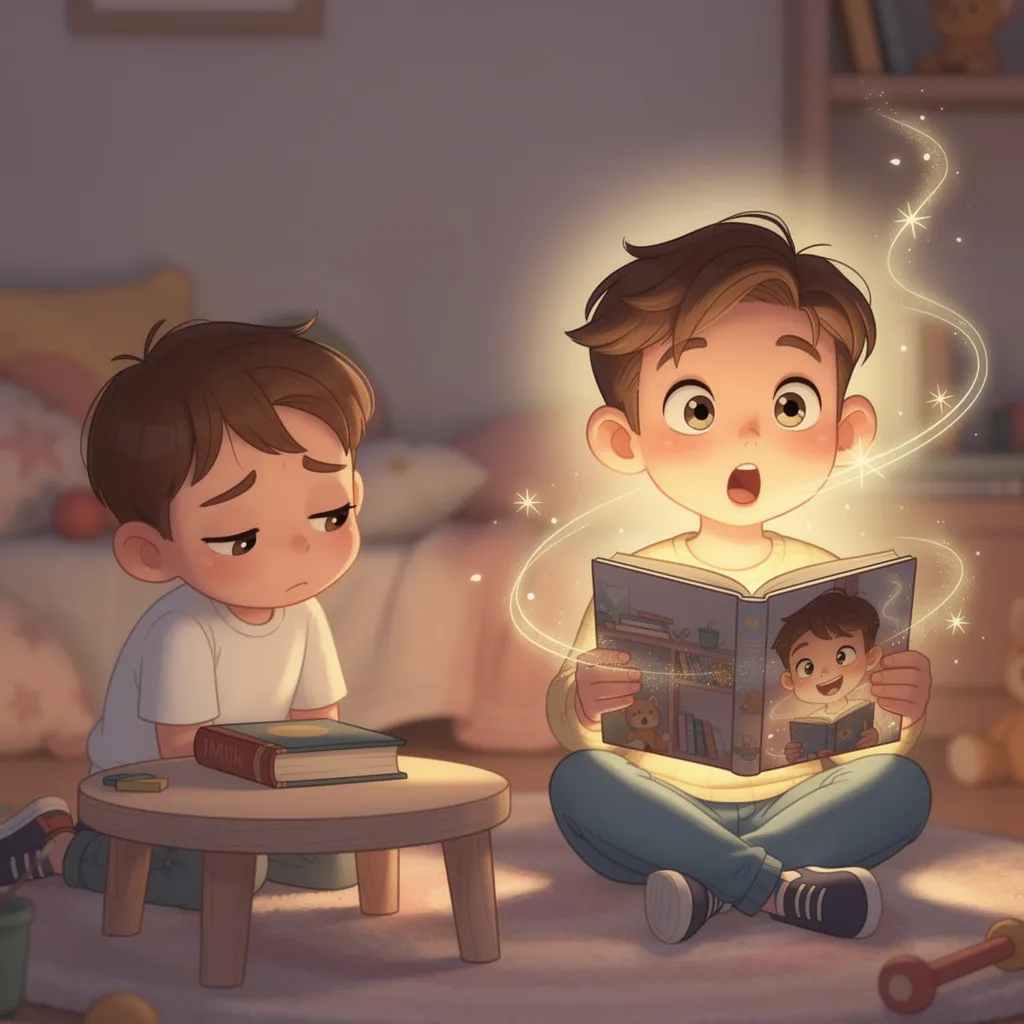
The difference in engagement between a traditional lesson and a personalized story is immediately visible. When students see themselves in the story - a character who looks like them, facing challenges they relate to - the material transforms from abstract information into personal experience. Teachers consistently report higher recall and deeper understanding when concepts are delivered through narrative.
Practical Lesson Plan Ideas
Here are concrete ways to integrate AI storytelling into your existing curriculum across different subjects and grade levels. These aren't theoretical suggestions - they're approaches that teachers are already using successfully.
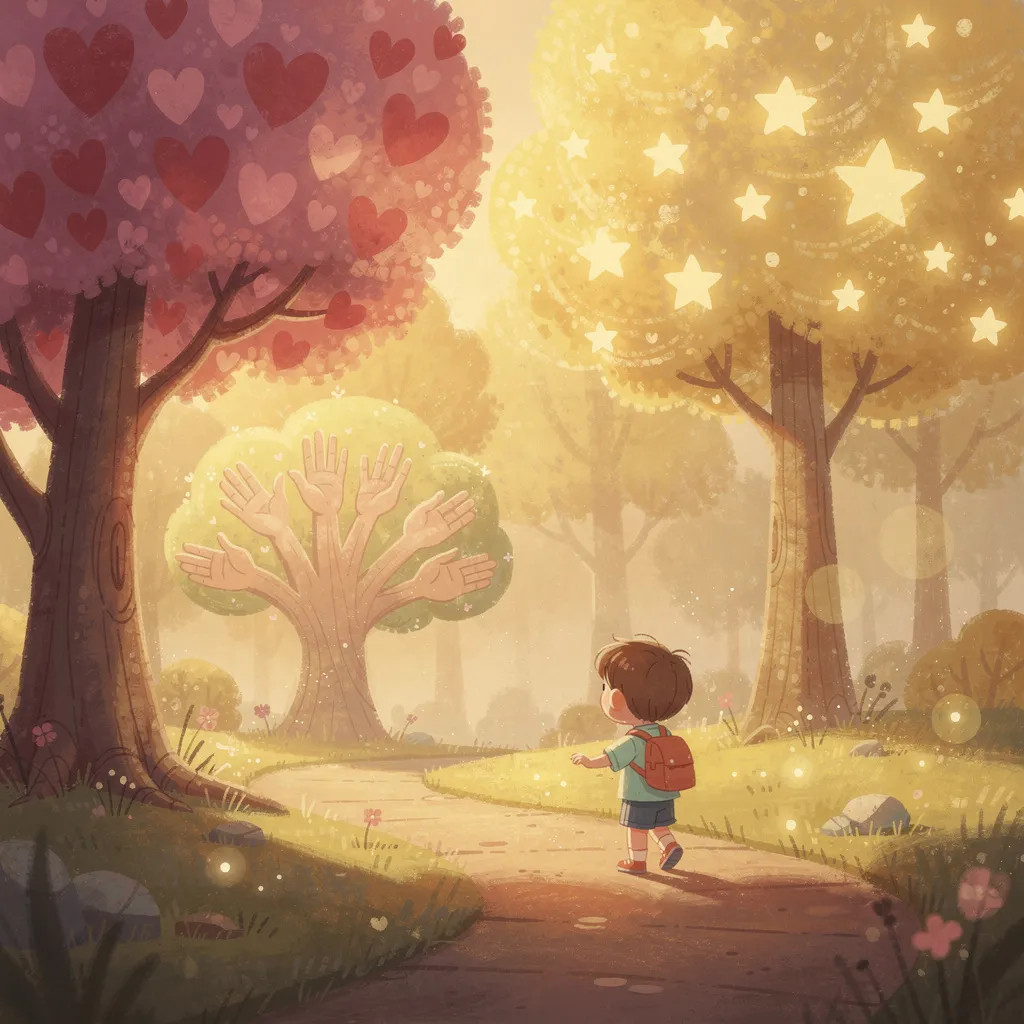
For science, create stories where students explore concepts as adventures. "[Student name] discovers a tiny door that leads inside a raindrop, and follows the water's journey from ocean to cloud to rain to river." For the water cycle. "[Student name] builds a time machine and travels back to the age of dinosaurs, learning about each era they pass through." For earth science and geology. The narrative framework gives abstract scientific concepts a concrete, experiential context that dramatically improves comprehension and retention.
For language arts, use AI stories as mentor texts. Generate a story and then have students analyze its structure - where's the beginning, middle, and end? What's the conflict? How does the character change? Because the story features familiar characters and settings, students engage with the analysis more deeply than they would with a standard text. You can also use Fable to generate stories at different reading levels, making differentiated reading instruction much more manageable.
For social studies and history, create stories that place students in historical contexts. "[Student name] lives in a colonial American town and has to decide whether to support independence or remain loyal to the crown." These stories make historical events personally relevant and help students understand that history was made by real people facing real choices - not just names and dates in a textbook.
For social-emotional learning, create stories that address classroom dynamics directly. If students are struggling with conflict resolution, create a story about a character navigating a disagreement with a friend. If a new student has joined the class, create a story about welcoming someone new and including them. These targeted stories are far more effective than generic SEL curricula because they speak directly to your students' actual experiences.
Differentiation Made Simple
One of the biggest challenges in teaching is meeting every student where they are. In a typical classroom, reading levels can span several grade levels. Some students need more visual support. Some learn best through auditory input. Creating differentiated materials for each student has always been the gold standard, but the practical reality is that no teacher has time to create 25 different versions of every lesson.
AI storytelling dramatically reduces the differentiation workload. You can generate the same story concept at different complexity levels. You can create visual-heavy versions for students who need more image support. The built-in narration serves auditory learners and struggling readers who benefit from hearing text read aloud while seeing it on the page. And the personalization element - seeing themselves in the story - provides an engagement boost that helps students at every level stay focused and motivated.
Student-Created Stories
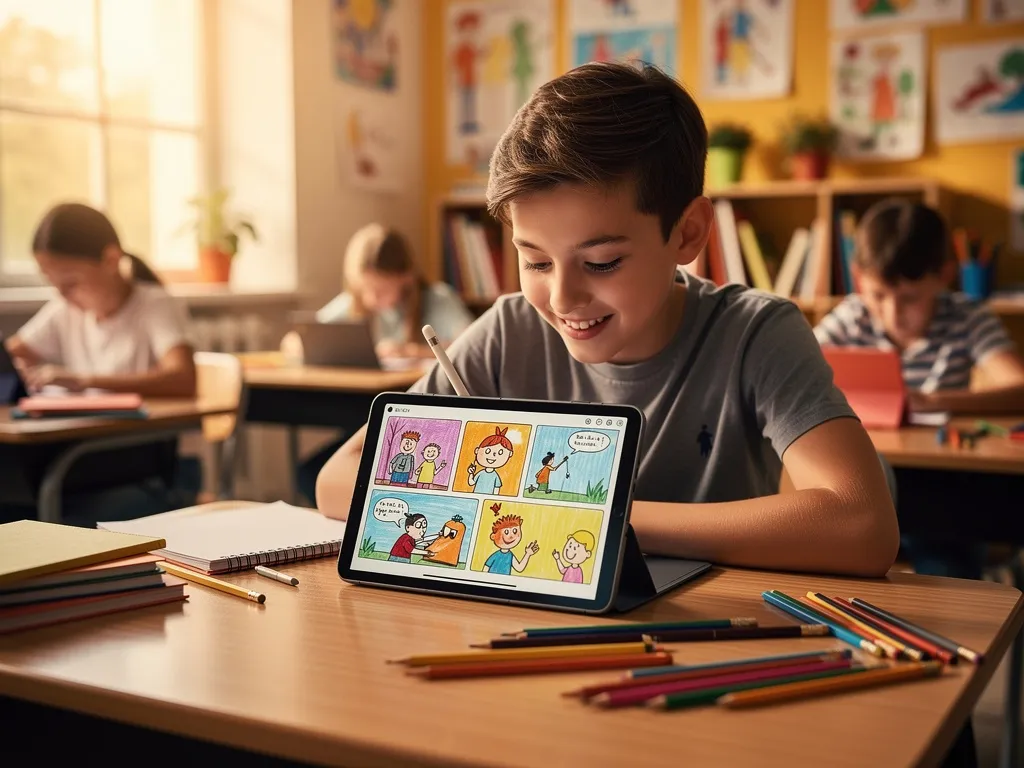
Some of the most powerful educational applications come from having students create their own stories. When students use Fable to tell a story about a concept they've learned, they're demonstrating comprehension in a way that's far more revealing than a multiple-choice test. The act of translating knowledge into narrative requires deep understanding.
Give students a prompt like "Create a story that teaches someone about photosynthesis" and you'll see immediately who truly understands the concept and who has only memorized surface-level facts. The narrative format forces them to think about sequence, causation, and relationships between concepts. It's assessment disguised as creative expression, and students engage with it enthusiastically because it feels nothing like a test.
Student-created stories also make fantastic classroom library contributions. When students know their story will be read by classmates, the motivation to get the content right increases dramatically. You end up with a growing library of student-authored, student-illustrated stories covering your curriculum - created by the students, for the students. That's a level of ownership and agency that transforms how students relate to their learning.
Addressing Common Concerns
Teachers and administrators often have legitimate concerns about AI in the classroom, and those concerns deserve honest responses. The most common worry is that AI will replace creative thinking - that students will let the AI do the thinking for them. This is a valid concern for tools like AI writing assistants, where the AI is doing the exact task the student should be learning. But AI storytelling is different. The student provides the creative direction - the concept, the characters, the scenario. The AI handles the production - illustration, narration, music. The creative and intellectual work remains with the student; the AI handles the technical production that would otherwise be impossible in a classroom setting.
Another concern is content appropriateness. Fable generates age-appropriate content by design, but teachers should always review generated stories before sharing them with the class, just as they would review any other educational material. It's also worth noting that AI-generated stories, like all AI content, should be used as a supplement to, not a replacement for, direct instruction and human interaction. The story is a starting point for discussion, analysis, and deeper exploration - not the end point of learning.
Getting Started This Week
You don't need to overhaul your curriculum to start using AI storytelling in your classroom. Start small. Pick one lesson this week and create a personalized story to introduce the concept. Use it as a warm-up activity or a hook at the beginning of class. Watch how students respond. Notice the engagement difference. Then gradually expand - let students create their own stories as part of a project. Use stories for differentiation during reading groups. Create stories for your SEL block that address real classroom situations.
The technology is intuitive enough that you can learn to use it in a single planning period. Create your first story tonight, use it in class tomorrow, and see what happens. I think you'll be surprised by how naturally AI storytelling fits into what you're already doing - and by how dramatically it can change the energy in your classroom. The best educational tools don't add complexity to teaching. They remove barriers between students and understanding. That's what personalized, AI-powered storytelling does, and it's available to every classroom, right now.
Frequently Asked Questions
How can teachers use AI storytelling in the classroom?
Teachers use AI story generators for creative writing prompts, reading engagement, social-emotional learning, and as enrichment activities. Creating stories where students are the main characters increases engagement with any topic - history, science, social skills, or literature.
Is AI storytelling appropriate for classroom use?
Yes, when using apps designed for children. Fable has content safety filters and parent/teacher-controlled prompts. It works well for individual or small group activities. Teachers can assign specific story themes tied to curriculum goals.
Can AI stories help with social-emotional learning in schools?
Absolutely. AI-generated social stories can help students practice navigating social situations - making friends, dealing with conflict, managing emotions. Seeing themselves as the character who successfully handles these scenarios builds confidence and social skills.
I regularly share updates on what I'm building and how I'm improving Fable.
Follow me on XReady to Create Your Own Story?
Create a story in your browser, or download Fable for iOS and Android. Add your own characters, illustrations, and narration.