How AI-Personalized Social Stories Help Children with Autism

What Are Social Stories?
Social Stories were developed in 1991 by Carol Gray as a tool for helping children with Autism Spectrum Disorder (ASD) understand and navigate social situations. The concept is elegantly simple: you create a short, descriptive story that walks through a specific scenario - going to the dentist, meeting a new teacher, dealing with a change in routine - from the child's perspective. The story describes what will happen, how people might feel, and what the child can do. Decades of research have shown that Social Stories are one of the most effective, evidence-backed interventions for helping children with autism develop social understanding, reduce anxiety around new situations, and build coping strategies for everyday challenges.
Why Social Stories Work
Children with autism often struggle with the unpredictability of social situations. They may not intuitively read social cues, understand unwritten rules, or know what to expect in new environments. This uncertainty can trigger significant anxiety, meltdowns, or withdrawal. Social Stories work by making the implicit explicit. Instead of expecting a child to just "figure out" what happens at a birthday party, a Social Story walks them through it: "When I arrive at the party, there will be other children. Some of them might be loud. That's okay. I can find a quiet spot if I need one. There will be cake, and everyone will sing happy birthday. I don't have to sing if I don't want to." By previewing the situation in a calm, safe setting, the child builds a mental script they can rely on when the real moment arrives. Multiple studies published in the Journal of Autism and Developmental Disorders have found that Social Stories significantly reduce anxiety and challenging behaviors while improving social interaction.
How AI Personalization Changes Everything
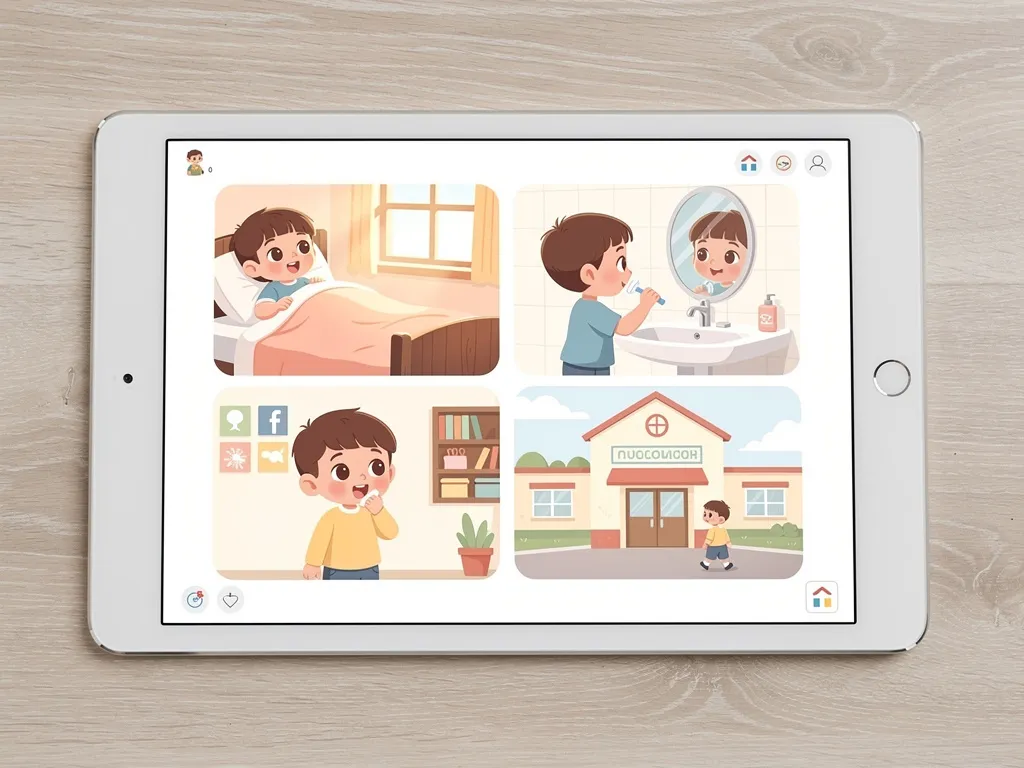
Traditional Social Stories are typically written by therapists or parents, often as simple text with basic illustrations or clipart. They work, but they have limitations. The illustrations are generic. The child has to imagine themselves in the scenario. And creating a new story for every situation takes significant time and effort. AI personalization transforms Social Stories in a profound way. When a child sees a character that actually looks like them - their hair, their skin tone, their favorite outfit - navigating the exact situation they're about to face, the story becomes dramatically more powerful. It's no longer abstract. It's them, in that place, doing that thing, and everything turns out okay. The self-reference effect, well-documented in cognitive psychology, means children process and retain information far more effectively when it relates directly to themselves.
The Power of Visual Consistency
For children with autism, visual consistency is especially important. Many children on the spectrum are visual learners who process images more readily than text or spoken language. When the character in a social story changes appearance between scenes - different hair color, different outfit, different face - it can be confusing and counterproductive. Fable's consistent character technology ensures that the child's character looks the same in every single scene, in every single story. This visual reliability creates a sense of safety and predictability that's particularly valuable for children with ASD. They can focus on the social scenario being depicted rather than trying to reconcile why the character keeps changing.
Practical Guide: Stories You Can Create
Here are specific types of Social Stories you can create with Fable to help your child with everyday situations. For transitions and changes: "Tomorrow I'm going to a new classroom" or "This weekend we're visiting Grandma's house" - stories that preview what will happen and reassure the child that changes are manageable. For social interactions: "When my friend comes to play" or "How to join a group game at recess" - stories that model appropriate social behaviors without being preachy. For sensory challenges: "Going to the fireworks show" or "What to do when the cafeteria is too loud" - stories that acknowledge sensory difficulties and present coping strategies. For daily routines: "My morning routine before school" or "Getting ready for bed" - stories that reinforce the sequence of activities in a visual, engaging way. For emotional regulation: "What to do when I feel angry" or "It's okay to feel sad sometimes" - stories that validate emotions and offer concrete steps for managing them.
Narration Adds Another Layer

Traditional Social Stories are usually read aloud by a parent or therapist. Fable adds professional, expressive narration that many children find deeply engaging. The narrator speaks calmly and clearly, with natural pacing that gives the child time to process each scene. For children who respond well to auditory input, this narration can be replayed as many times as needed - before a doctor's appointment, on the drive to a new place, or as part of a calming bedtime routine. The combination of familiar visuals (their character, their scenario) with soothing narration creates a multisensory social story experience that goes well beyond what text and clipart can achieve.
Tips for Creating Effective Social Stories
When creating Social Stories with Fable, keep these guidelines in mind. Be specific and literal - children with autism often interpret language literally, so "there will be lots of people" is better than "it'll be a zoo." Use positive, descriptive language - focus on what the child can do rather than what they shouldn't do. Include perspective sentences - "My teacher might feel happy when I raise my hand" helps build theory of mind. Keep it realistic - the story should accurately represent what will happen, not an idealized version. Read it multiple times - repetition is key. Many parents find that reading the social story daily in the days leading up to an event produces the best results. And most importantly, involve your child in the creation process when possible. Let them see their character being made, let them choose some details. Ownership increases engagement.
Frequently Asked Questions
What is an AI social story generator for autism?
An AI social story generator creates personalized narratives that help children with autism understand social situations. You describe a specific scenario your child finds challenging - going to the dentist, making friends at recess, handling loud noises - and the AI creates a story where your child's character navigates it successfully.
Can AI-generated social stories help children with autism?
They can be a helpful supplemental tool. Personalized social stories work because the child sees themselves in the scenario, which increases engagement and recall. They are not a replacement for therapy, but many therapists recommend them as reinforcement between sessions.
How do I create a social story for my autistic child?
In Fable, create a character that looks like your child, then describe the specific situation they find challenging. The story will walk their character through the scenario step by step, modeling expected behaviors and outcomes. Keep the tone positive and the steps clear.
Are AI stories good for children with special needs?
Many parents of children with autism, ADHD, sensory processing differences, and other special needs report positive results. The personalization creates stronger engagement than generic stories, and the multi-sensory format (pictures, narration, music) reaches children who struggle with text-only content.
I regularly share updates on what I'm building and how I'm improving Fable.
Follow me on XReady to Create Your Own Story?
Create a story in your browser, or download Fable for iOS and Android. Add your own characters, illustrations, and narration.