AI Stories for Kids with ADHD: Why Personalization Helps

The Reading Struggle That Nobody Talks About Enough
Ask anyone with ADHD about their relationship with reading and you'll get a complicated answer. It's not that they can't read. It's not that they don't want to read. It's that the traditional reading experience - sitting still, tracking words on a page, maintaining focus through a long narrative - is fighting against the way their brain is wired. ADHD isn't a lack of attention. It's a difference in how attention is regulated. Kids with ADHD can hyperfocus on things that engage them intensely - ask any parent whose child spent three hours building a LEGO set they "can't concentrate on" during homework. The issue isn't attention itself. It's that attention needs to be captured and held by something sufficiently stimulating. Traditional children's books, wonderful as they are, weren't designed with ADHD engagement in mind. The pacing is often slow. The personal relevance is low (it's someone else's story about someone else's character). And the format - static pages, no audio, no interactivity - doesn't provide the multi-sensory stimulation that ADHD brains crave. The result? Many kids with ADHD develop negative associations with reading early on. They internalize the message that they're "not good readers" or that books "aren't for them." And that's a tragedy, because these kids often have incredible imaginations, rich creative lives, and a deep capacity for narrative engagement - it just needs to be activated differently. That's where personalization comes in, and why AI-generated stories are changing the equation for ADHD families.
Why Being the Hero Changes the Attention Game
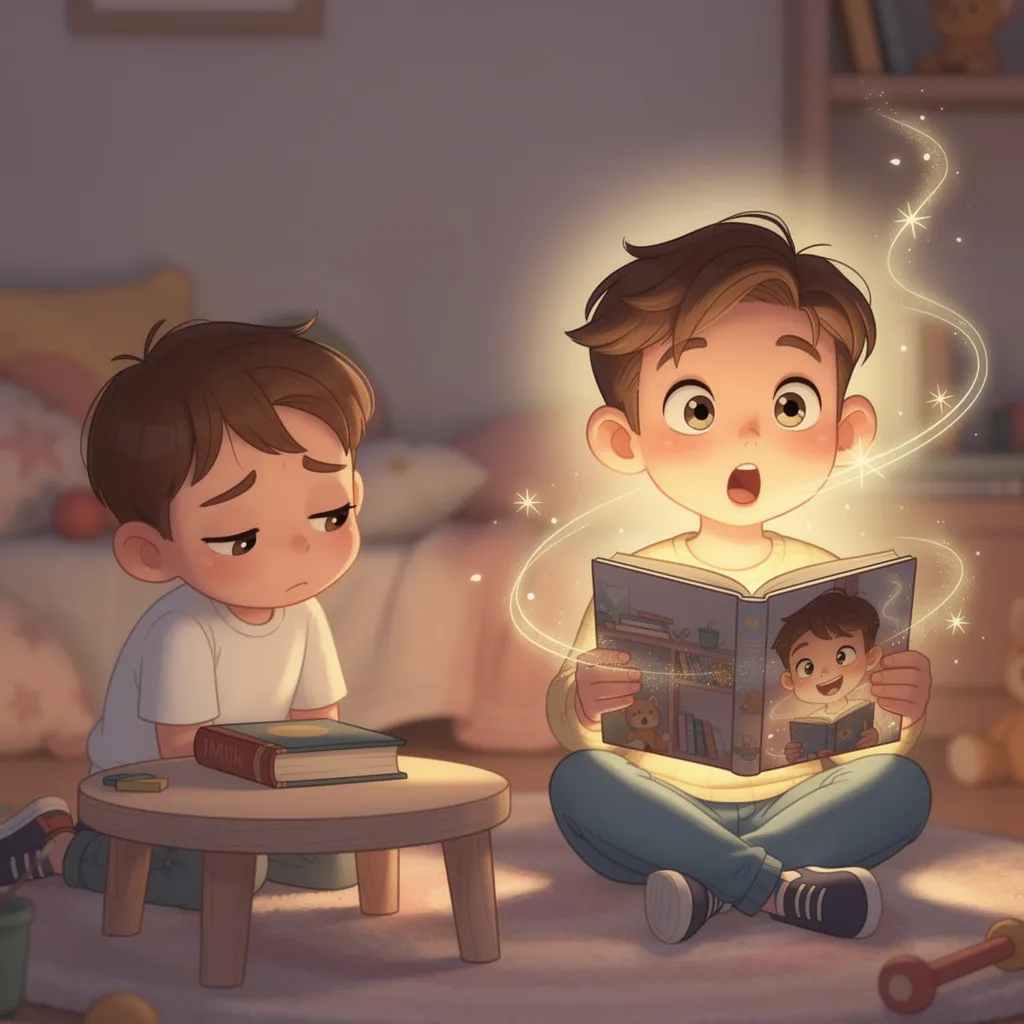
Here's a simple experiment you can try with any child, ADHD or not: tell them a story about a random character named Alex who finds a treasure map. Then tell them the exact same story, but replace "Alex" with their actual name. Watch the difference in engagement. For neurotypical kids, the difference is noticeable. For kids with ADHD, it can be dramatic. The ADHD brain is driven by interest-based attention. Unlike the importance-based attention system that most neurotypical people rely on ("I should pay attention to this because it matters"), the ADHD attention system runs on "I'm paying attention to this because it's interesting to me right now." And few things are more inherently interesting to a human being - of any neurotype - than a story about themselves. When a child with ADHD opens a Fable story and sees their own name on the first page, their own face in the illustrations, and a story that was generated based on their specific interests and personality traits, something clicks. The attention system has a reason to engage. The story is relevant. It's personal. It's about them. This isn't a gimmick or a trick. It's actually aligned with what ADHD researchers recommend. Dr. Russell Barkley, one of the leading ADHD researchers in the world, has emphasized that children with ADHD need external supports that make tasks more immediate, interesting, and personally meaningful. A personalized story checks all three boxes. The illustrations help too. Instead of just processing text - which requires sustained visual attention on small, dense symbols - kids are also engaging with colorful, dynamic images of themselves in the story. The visual variety keeps the brain stimulated, and the personal relevance keeps attention anchored.
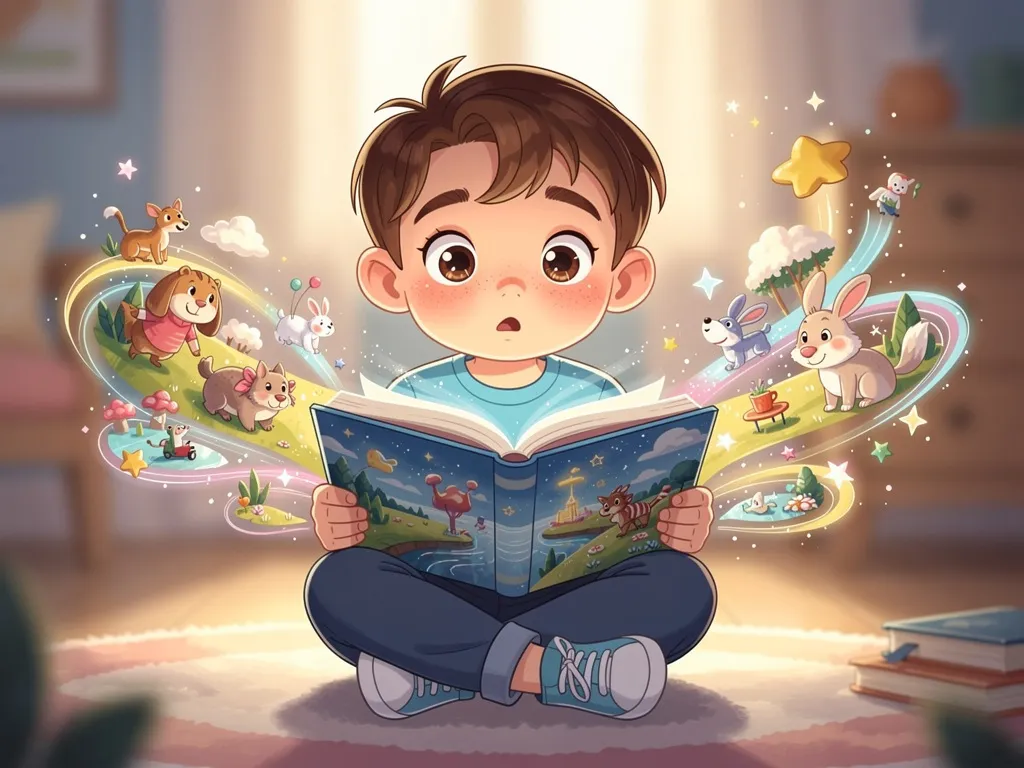
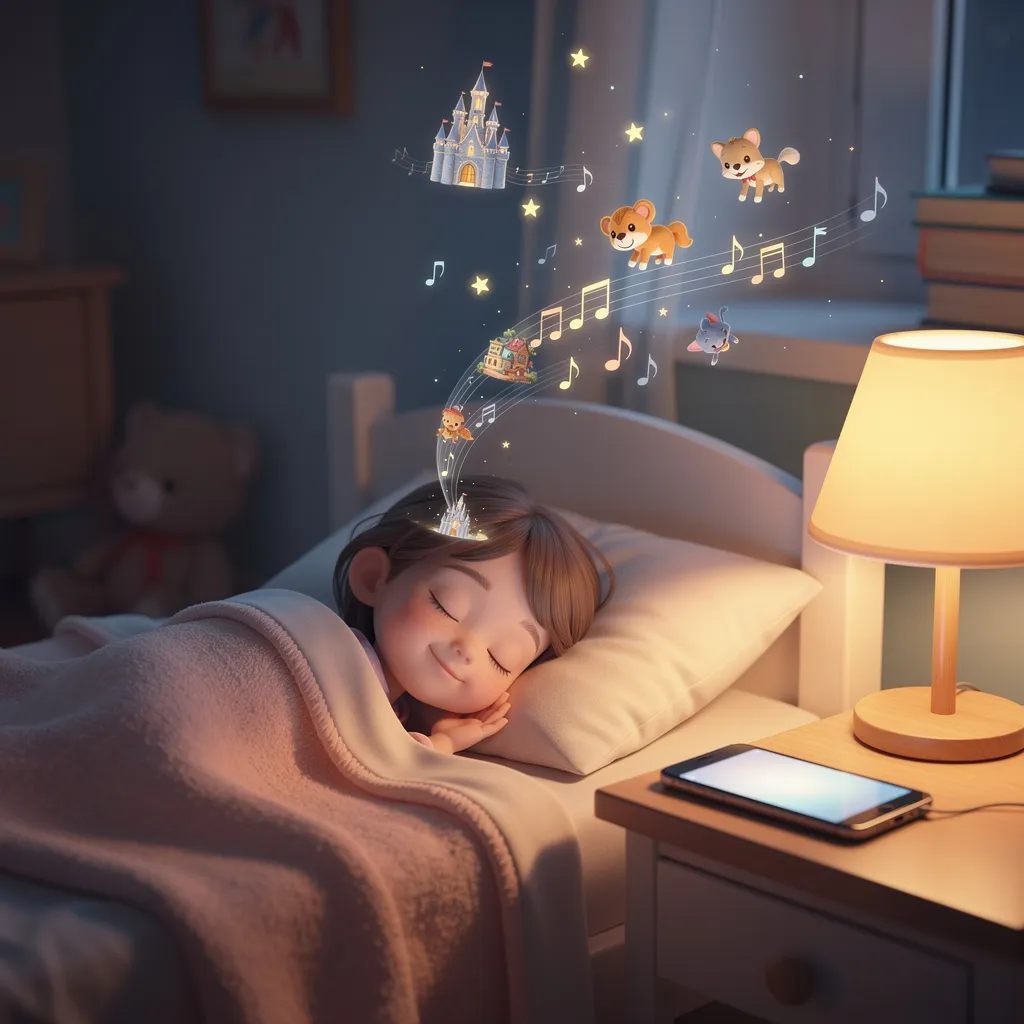
One of Fable's features that accidentally became a game-changer for ADHD families is the narration. Every Fable story comes with expressive AI narration, character voices, and background music. And for kids with ADHD, this transforms reading from a single-channel experience into a multi-sensory one. Think about what traditional reading asks of an ADHD brain: sit still, focus your eyes on text, decode words, construct meaning, track a narrative, and do all of this using only your visual processing channel. That's a lot of cognitive load concentrated in one modality, with nothing to catch you if your attention drifts. Now think about what a narrated, illustrated, personalized story offers: visual stimulation from colorful illustrations, auditory engagement from narration and music, personal relevance from seeing yourself as the character, and emotional engagement from a story designed to capture interest. Multiple sensory channels working together mean multiple pathways for attention to stay connected. Families have told us that kids who "won't sit still for a book" will listen to their personalized Fable story with rapt attention. Part of it is the novelty. Part of it is the personalization. And part of it is that the multi-sensory format simply works better with how their brain processes information. This is consistent with research on ADHD and learning modalities. Studies have shown that children with ADHD often perform better with multi-modal instruction - combining visual, auditory, and kinesthetic input - compared to single-modality approaches. A narrated, illustrated, personalized story is essentially multi-modal storytelling, and the engagement results speak for themselves.
Practical Tips for Using AI Stories with ADHD Kids
Based on feedback from ADHD families and insights from child development specialists, here are practical strategies for getting the most out of personalized AI stories with children who have ADHD. Keep stories shorter, at least at first. If your child's attention typically maxes out at five minutes, don't start with a twenty-page epic. Create shorter stories and build up gradually as they develop positive associations with the experience. Success breeds success - a child who finishes a short story and feels good about it is more likely to try a longer one next time. Use the audio narration. For many ADHD kids, listening while looking at illustrations is more sustainable than reading text. Let them experience the story as an audiovisual experience first. If they want to read the text themselves later, great. But don't make text-reading the barrier to enjoying the story. Lean into their current obsessions. ADHD kids often have intense, rotating interests. If they're in a dinosaur phase, create dinosaur stories. If they're obsessed with space, create space adventures. If they just watched a cooking show and now want to be a chef, create a chef story. Meeting them where their interest already lives dramatically reduces the activation energy needed to engage. Make it interactive. After reading or listening to a story, don't just move on. Ask questions, act out scenes, draw the characters, build the setting with blocks. The story becomes a launchpad for physical, creative activity - which is exactly the kind of engagement ADHD brains thrive on. Establish a routine, but keep it flexible. A regular "story time" helps build the habit, but rigid routines can backfire with ADHD kids who resist feeling controlled. Offer choices: "Do you want your story now or after your bath?" "Do you want to listen to it or read it together?" Autonomy increases buy-in. Celebrate the engagement, not just the outcome. If your child listened to three pages of a story before getting distracted, that's three pages of engagement to celebrate. Don't measure success by neurotypical standards. Every minute of willing engagement with a story is building positive associations with narrative and literacy.

Beyond the attention benefits, there's something deeper happening when ADHD kids engage with personalized stories: they're building a positive self-narrative. Many children with ADHD internalize a lot of negative messaging by the time they're in elementary school. They're "the kid who can't sit still." They're "the one who never finishes." They're "too much" or "not enough" depending on the context. This isn't because anyone necessarily says these things directly - though sometimes they do - but because the structures of school and daily life implicitly tell ADHD kids that they don't fit the mold. A personalized story tells them something different. In a Fable story, the ADHD child is the hero. They're brave. They're resourceful. They're the one who saves the day, solves the puzzle, makes the discovery. The traits that get them in trouble in real life - impulsivity becomes boldness, distractibility becomes curiosity, high energy becomes adventurousness - are reframed as strengths in the story. This isn't just feel-good rhetoric. Self-concept research shows that children's beliefs about themselves are shaped by the narratives they encounter and internalize. A child who regularly sees themselves represented as capable, brave, and successful in stories is building a different internal narrative than a child who mainly receives messages about their deficits. One occupational therapist who works with ADHD children told us she recommends Fable to families specifically because "the personalization makes the positive messaging stick. It's one thing to tell a child they're brave. It's another to show them a story where a character who looks like them and has their name does something brave. The second version gets through in a way the first one doesn't."
What the Research Says About Personalization and ADHD
The intersection of personalization, technology, and ADHD is a growing area of research, and the early findings are encouraging. A 2023 study published in the Journal of Attention Disorders found that children with ADHD showed significantly longer sustained attention when engaging with personalized digital content compared to generic content. The researchers theorized that personalization increases perceived relevance, which activates the interest-based attention system that ADHD children rely on. Separate research from the University of Michigan's ADHD program has shown that narrative engagement - being absorbed in a story - activates the default mode network in ways that can actually be therapeutic for ADHD brains. The focused-yet-relaxed state of story absorption is different from the forced-concentration state of homework, and it may help children practice sustained attention in a low-stress context. The multi-sensory aspect is supported by research too. A meta-analysis of learning interventions for ADHD children found that approaches combining visual and auditory elements produced better engagement and retention than single-modality approaches. Fable's combination of illustrations, text, narration, music, and personalization aligns with this evidence. It's worth noting that no app is a treatment for ADHD. Fable isn't therapy, it isn't medication, and it isn't a substitute for professional support. What it is, based on both research and family feedback, is a tool that works with ADHD brains instead of against them. And for families who've struggled to find reading experiences that their child willingly engages with, that's meaningful.
Getting Started: Your ADHD Child's First Fable Story
If you're ready to try personalized AI stories with your ADHD child, here's how to set up the best possible first experience. Start by creating a character that's clearly, recognizably them. Use their real name. Match the character's appearance to how your child looks. Include personality traits they'd recognize and be proud of - "adventurous," "creative," "really funny," "super curious." The more they see themselves in the character, the stronger the engagement hook. For the first story, choose a topic that aligns with their current interest. Don't try to sneak in an educational lesson or a behavioral message - not yet. The first goal is pure engagement. You want them to finish the story and say "that was awesome, can I have another one?" Once you've established that positive association, you can gradually introduce stories with more varied themes. Let them control the experience. "Do you want to read it or listen to it?" "Should we sit on the couch or in your bed?" "Do you want the lights on or off?" Giving choices creates buy-in and reduces the oppositional reflex that many ADHD kids have toward being told what to do. Watch for the moment of recognition - when they realize the character is them. For many kids, this is the hook that changes everything. Their eyes widen, they point at the screen, they say "that's me!" That's the moment you know the personalization is working. Don't worry about sitting still. If your child listens to the story while fidgeting, pacing, or lying upside down on the couch, they're still listening. ADHD kids often absorb information better when their body is in motion. The narration feature is perfect for this - they can listen without needing to sit in a fixed position staring at a page. And most importantly, follow their lead. If they want to hear it again immediately, let them. If they want to create another story right away, do it. If they want to act out the story, draw the characters, or tell you their own version of what happened next - lean in. That kind of enthusiastic engagement with a narrative experience might be exactly what they've been missing. Every child with ADHD is different. What works brilliantly for one might not click for another. But the fundamental principle - that personalized, multi-sensory stories capture attention better than generic, text-only ones - holds across the ADHD spectrum. And with Fable, the experiment takes under 5 minutes to set up. The potential upside is a child who discovers that stories can be for them after all.
Frequently Asked Questions
Why do personalized stories work for kids with ADHD?
ADHD brains are wired for novelty and personal relevance. A story featuring the child as the hero provides both. The personal stake captures attention in a way generic stories often cannot. Multi-sensory delivery (illustrations, narration, music) also helps maintain focus.
What is the best storytelling app for children with ADHD?
Look for an app with audio narration (so they can listen while moving), engaging illustrations, and personalization. Fable works well because kids can listen to their own story while fidgeting, pacing, or lying upside down - they do not need to sit still and stare at a page.
Can AI stories replace ADHD therapy?
No. Personalized stories are a supplemental tool, not a replacement for professional support. They can reinforce skills practiced in therapy, provide positive narrative experiences, and help children see themselves as capable heroes - but they work best alongside professional guidance.
How do I get my ADHD child interested in reading?
Make it about them. When the book literally features their name, face, and interests, the motivation to engage changes. Start with audio narration so they can listen while moving. Many ADHD kids who resist traditional reading become enthusiastic about personalized stories.
I regularly share updates on what I'm building and how I'm improving Fable.
Follow me on XReady to Create Your Own Story?
Create a story in your browser, or download Fable for iOS and Android. Add your own characters, illustrations, and narration.