Inside FableProduct & AI
What is an agent harness?
The software that helps AI carry a project from one step to the next, explained through the making of a story.

A film begins with an idea. Making it takes a crew: a writer shapes the script, actors give the characters a voice, and an editor brings the recordings together. For that work to become one coherent story, everyone needs to know what has been decided and what happens next.
An AI project needs that kind of coordination too. A model can help write a scene or plan an illustration. The application around it has to supply the right draft, run the tools, save the results and keep the project moving. The software that handles those responsibilities is often called an agent harness.
We built one for Gambit because creating a story involves decisions that need to stay connected: what a character says, how they say it and what the audience sees at that moment. The harness helps carry those decisions through the work, including when you change your mind.
Think of it as the production crew around the model
On a film set, a request such as “let’s try that scene again” sets several things in motion. The actors need the latest script, the crew prepares the shot and someone records which take was chosen. A harness plays a comparable organising role for an AI system. It connects a proposed action to the practical work needed to carry it out.
The model generates responses and proposes actions. The harness manages the tools, information and limits around those actions. Together, they can form an agent: a system that works towards a goal over several steps. The terminology varies between products, but these responsibilities are a useful way to understand what is happening.
- 01
Gather the context
Load the request, relevant drafts and decisions already made.
- 02
Choose an action
The model proposes an edit, a tool to use or a question to ask.
- 03
Carry it out
Run an allowed action, requesting your approval where required.
- 04
Check the result
Validate and save the output, then use it to guide the next step.
That cycle can repeat as the task develops. If a tool reports a problem, the system can use that information to try a different approach or ask for help. A prompt contributes instructions to this process; the harness provides the software that actually runs it.
The same principle matters when work continues across sessions. Anthropic’s research on long-running agents describes the value of clear progress records and saved work that the next session can pick up. A project needs a reliable record of what has happened, even when the model cannot hold the entire history in its current context.
What this means when you are making a story
In Gambit, you can begin with a rough idea and develop it through conversation. You might ask for a more convincing villain, a gentler ending or dialogue that sounds less formal. As the story takes shape, the harness gives that conversation somewhere to lead: an editable plan, a script, an audio direction and a storyboard.
Keep a working script everyone can refer to
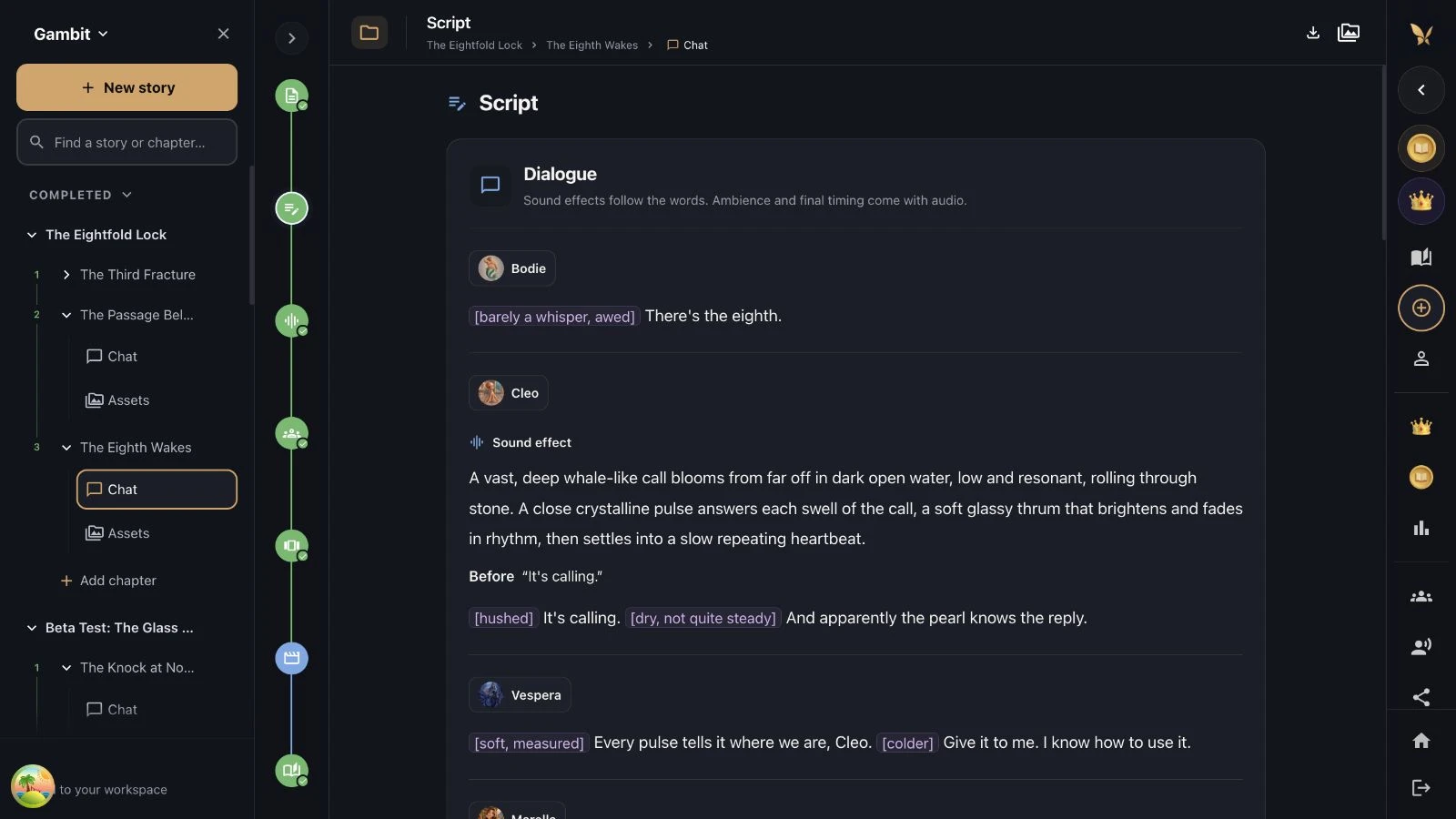
A production needs to know which script it is working from. Gambit saves the story’s main parts separately: the blueprint sets the direction, the script contains dialogue and performance instructions, and Cast & world holds the visual references. Later steps draw on relevant saved material, including the distinction between an approved version and a draft still being revised.
You can inspect these parts of the project directly. That makes it easier to see what you have agreed to, what still needs work and what the next stage will use.
Catch the knock-on effects of an edit
Consider a sound effect timed to a particular phrase. If you rewrite that phrase, its timing instruction may no longer make sense. In Gambit, a direct script edit that breaks this connection is stopped, with a request to revise the words and sound cue together through chat.
This is a small check with a practical purpose. It catches a mismatch that might otherwise reach the recording stage. The writing model can help find a better line; the surrounding software checks whether the sound cue still has a valid place in the script.
Build the pictures around the performance
A spoken scene has its own pace. An actor may pause before a revelation or linger over the final words. The pictures need room to follow that performance.
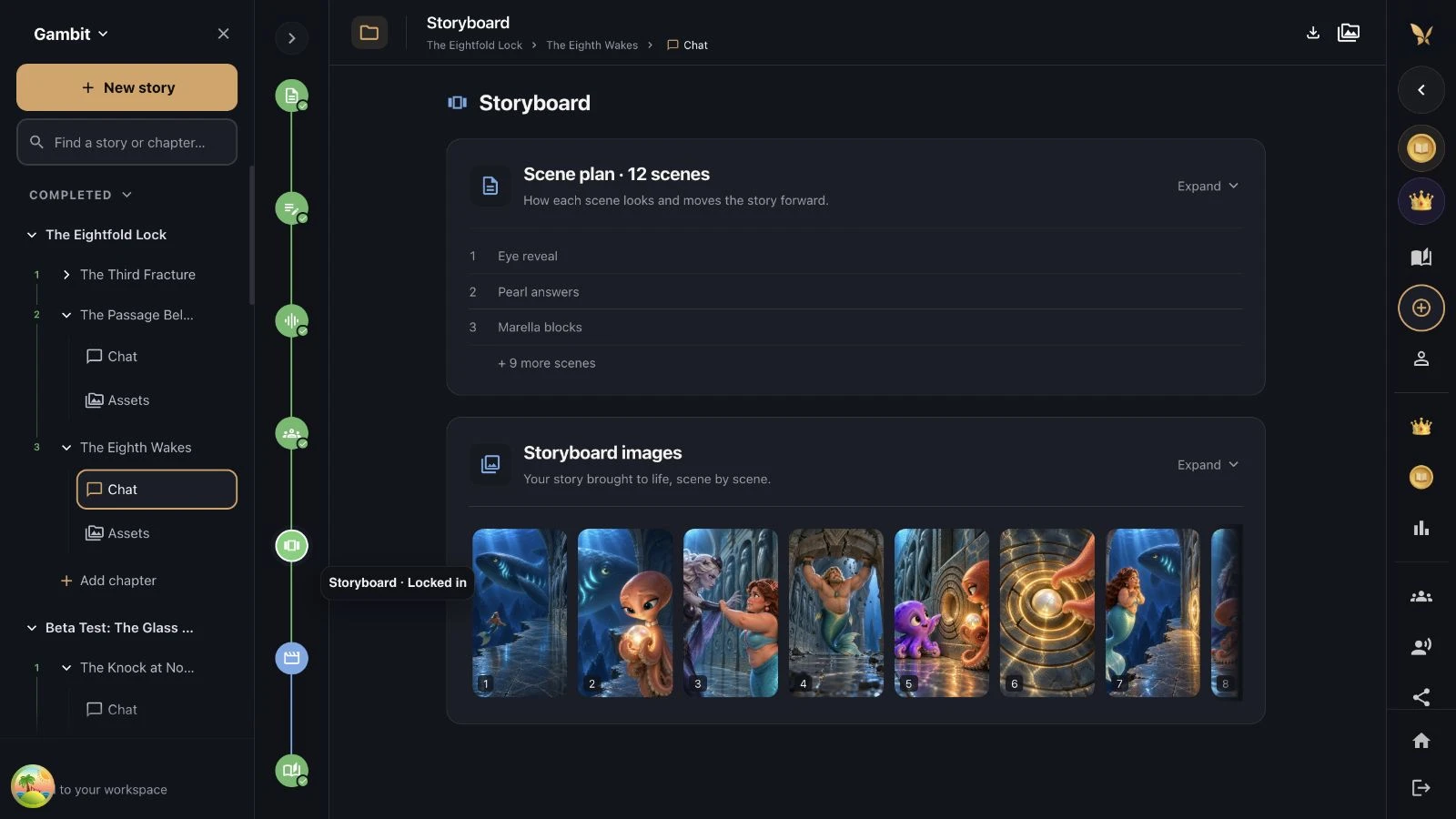
Gambit’s storyboard can use the measured timing of the generated audio alongside the character and setting references. Its checks include whether the planned shots cover the audio timeline. This gives the visual sequence a concrete foundation: the performance the audience will actually hear.
Know what you are approving
On a production, discussing another take and booking the recording session are separate decisions. Gambit makes a similar distinction between developing an idea and generating paid media. You review a quote before that generation runs, and the system checks that the approval still matches the work being requested.
Changing a script after recording it may mean making new audio. Changing a scene may mean generating another image. Those actions can use more tokens. Saved versions help keep track of the results, while the approval step gives you a chance to decide whether the next generation is worth doing.
Where do ChatGPT and Claude fit in?
ChatGPT and Claude are useful places to develop a story. They can help you explore a premise, question a character’s motivation and revise a difficult passage. Both also offer ways to organise ongoing work.
ChatGPT Projects bring chats, files and instructions together. Tools such as Canvas let you work on a draft alongside the conversation. Claude Projects provide shared reference material and project instructions, while Artifacts give you a separate surface for work you can edit and return to.
Gambit is organised around a particular production process. It gives the script, character references, voice direction and timed storyboard defined places in the project, with tools and checks connecting them. You can spend your time developing the story within that process.
Choosing a workflow for your story
| Your task | ChatGPT & Claude | Gambit |
|---|---|---|
| Develop an idea | Discuss possibilities, research background and work through a plot. | Develop the idea into a story blueprint you can review and revise. |
| Keep track of the work | Organise reference material, instructions and drafts using the product’s project tools. | Work with saved story stages and the selected outputs used by later stages. |
| Revise a scene | Ask for feedback or edit the writing in a supported document workspace. | Revise the script with checks for connections such as sound cues tied to dialogue. |
| Add sound and pictures | Arrange a workflow using the available tools and any other services you choose. | Follow a built-in process for voice direction, audio, visual references and a timed storyboard. |
A general assistant may fit neatly into a writing process you already enjoy. Gambit is useful when you want the writing, performance and visual planning to share a workspace. It uses supported AI models and media services, with Fable’s software coordinating the story between them.
You still decide what makes the story good
A well-run film production can keep the shoot on schedule and the footage in order. The director still has to decide whether a performance feels right. The same limit applies here. Software can check that a sound cue points to valid words or that shots cover a recording. Whether a joke lands, a character feels believable or an ending stays with you is a creative judgement.
Models can miss details, tools can fail and a technically valid result can still disappoint you. The value of a harness is in making the work easier to examine and revise. It gives you a way to act on a decision such as “keep this version of the character, but try the scene again.”
That is the experience we are building with Gambit. You can talk through an idea, shape each part of the story and review the results as you go. If you would rather choose a character and let Fable handle the creation, Fable Go offers that simpler path. Gambit gives you room to direct the details.
Common questions
Is an agent harness the same as a prompt?
A prompt tells a model what you want and supplies context. A harness is the software that delivers those instructions, runs tools, saves progress and checks results. It can use many prompts during a single task.
Does a harness make AI remember everything?
A harness can save project information and bring relevant parts into later requests. The model still has limits on how much information it can use at once, and it can overlook or misinterpret a detail. Saved work gives it a better starting point.
Is Gambit an AI model?
Gambit is a story workspace that uses AI models and media services. Fable’s harness connects them to the project’s script, voices, artwork, tools and review steps.