Screen Time vs. Story Time: A Guide to Digital Storytelling

The Screen Time Dilemma
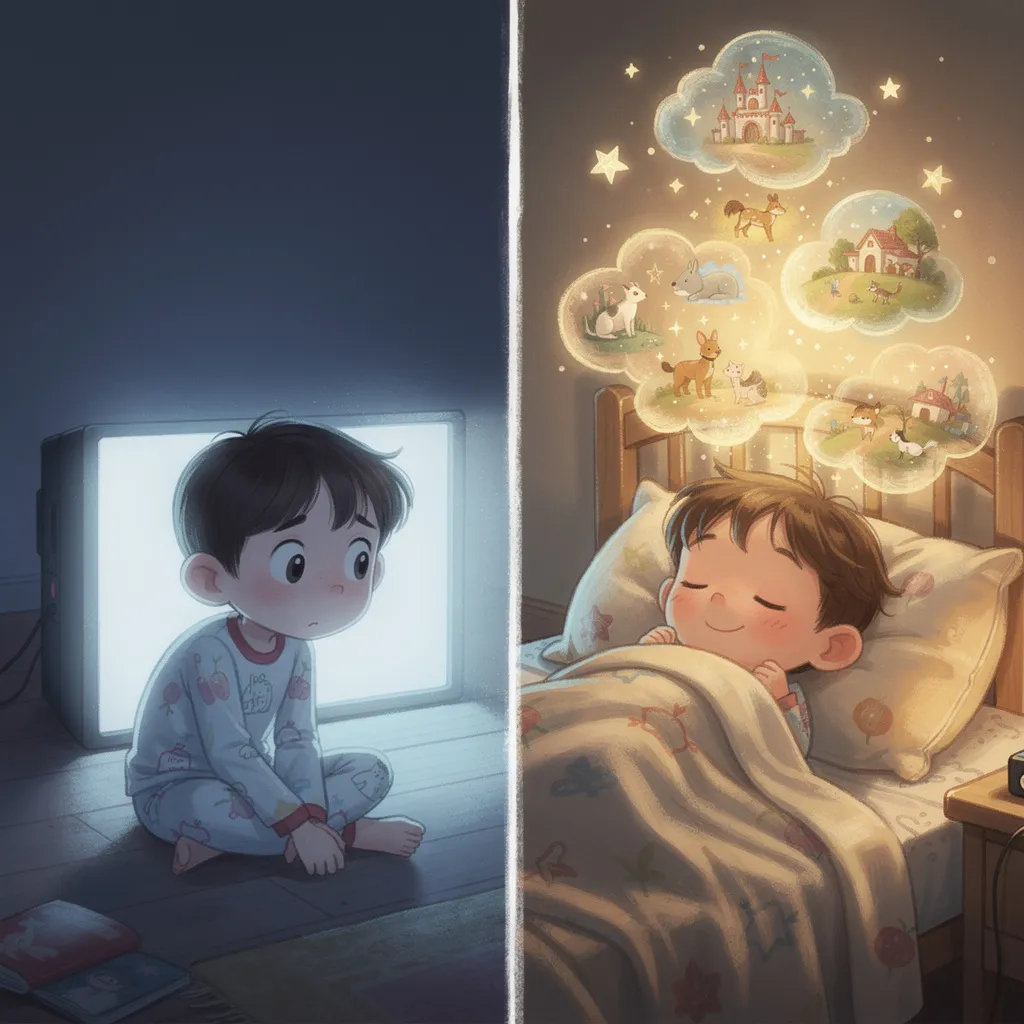
If you're a parent in 2026, "screen time" probably triggers a mix of guilt and confusion. The guidelines say to limit it, but screens are everywhere. Your child watches cartoons, plays educational games, video calls grandma, and now there are AI story apps. Is it all the same? Not even close. The research is clear: what matters isn't how much time a child spends looking at a screen, but what they're doing with that time. Passive consumption is very different from active engagement, and understanding the difference can help you make better choices.
Passive vs. Active Screen Time
The American Academy of Pediatrics distinguishes between passive and active screen time. Passive screen time - endlessly scrolling, watching autoplay videos, zoning out in front of a show - is the kind that raises concerns. It requires no mental effort and can displace more valuable activities. Active screen time - using a creative app, video chatting with relatives, or listening to an interactive story - engages the brain in meaningful ways. It's the digital equivalent of the difference between staring at a wall and reading a book.
Where Digital Storytelling Fits
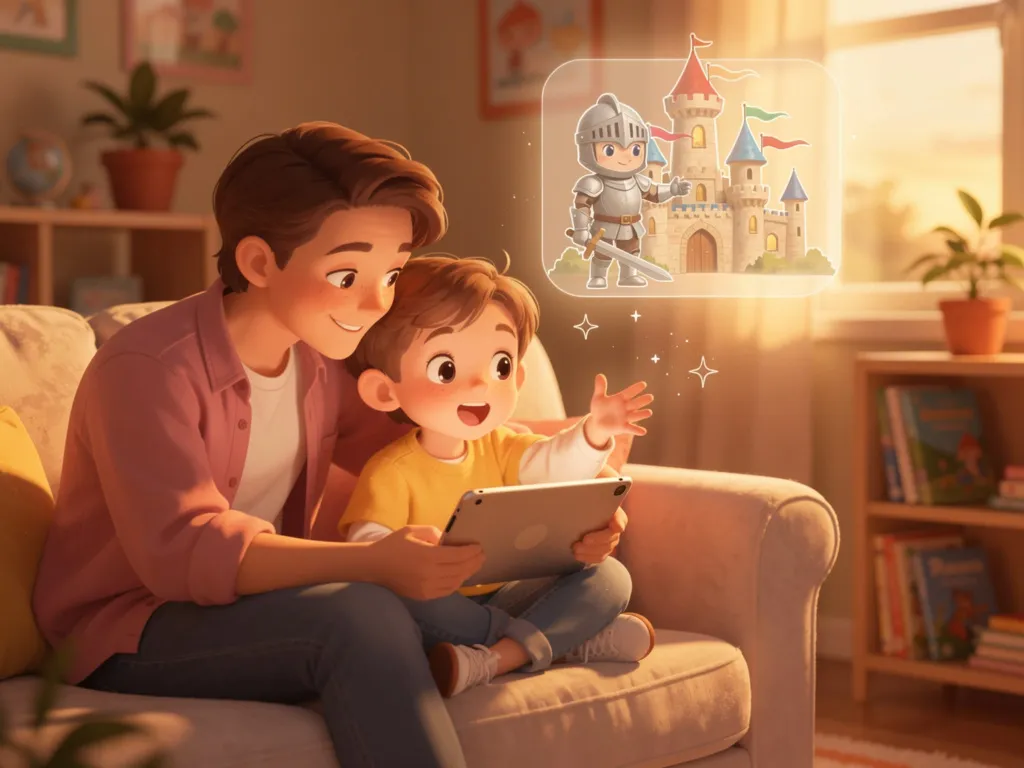
Digital storytelling apps like Fable fall firmly in the "active" category. When your child listens to a Fable story, they're engaging their imagination to visualize scenes beyond what's shown, processing complex narratives, building vocabulary from context, and experiencing emotions through the characters. The narration encourages them to listen actively, and the illustrations support comprehension without doing all the cognitive work for them. Many parents play Fable stories with the screen face-down, turning it into a pure audio experience.
The Blue Light Question
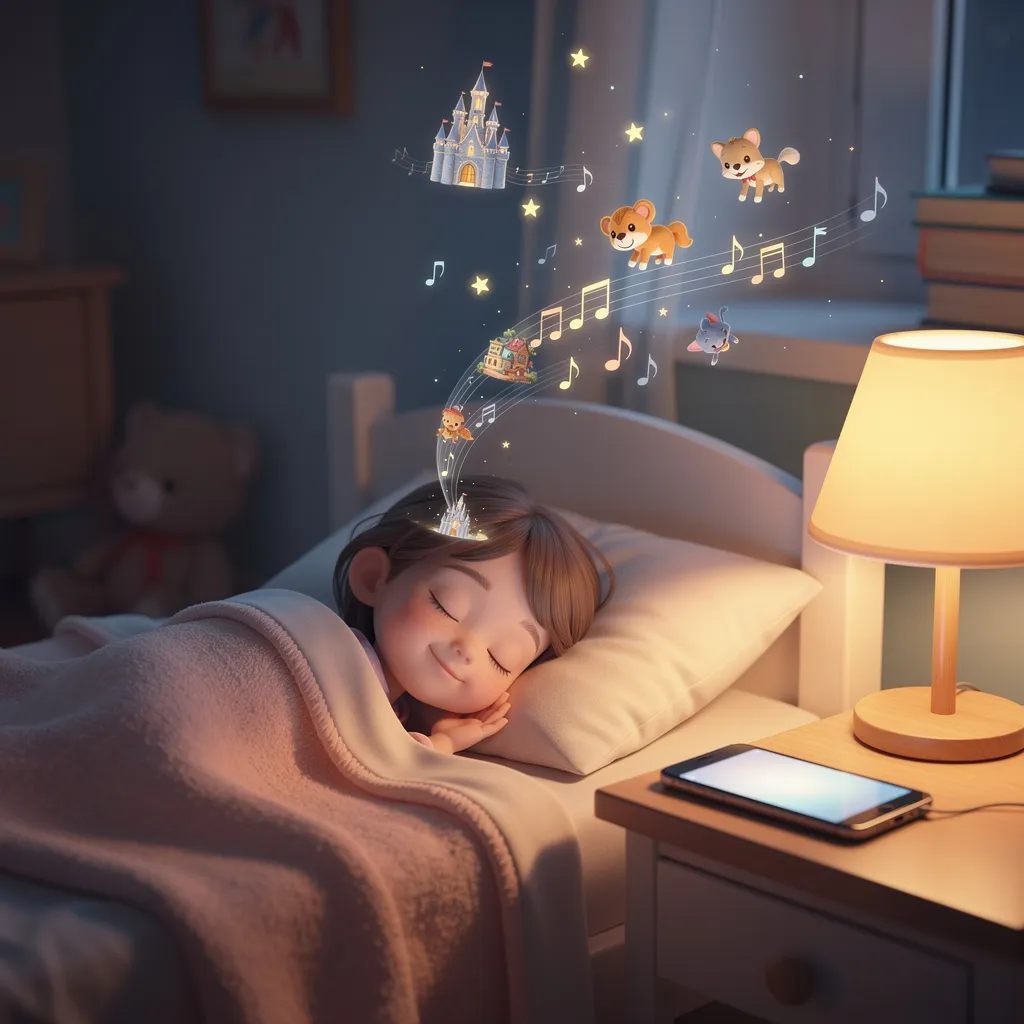
One legitimate concern about any evening screen use is blue light exposure, which can interfere with melatonin production and make it harder to fall asleep. Here's our suggestion: use your device's built-in night mode (Night Shift on iOS, Night Light on Android) to reduce blue light. Or better yet, start the story, then turn the phone face-down or lock the screen and let the narration play like an audiobook. The story continues in full, complete with narration and music, and your child can close their eyes and drift off naturally.
Creating Healthy Digital Habits
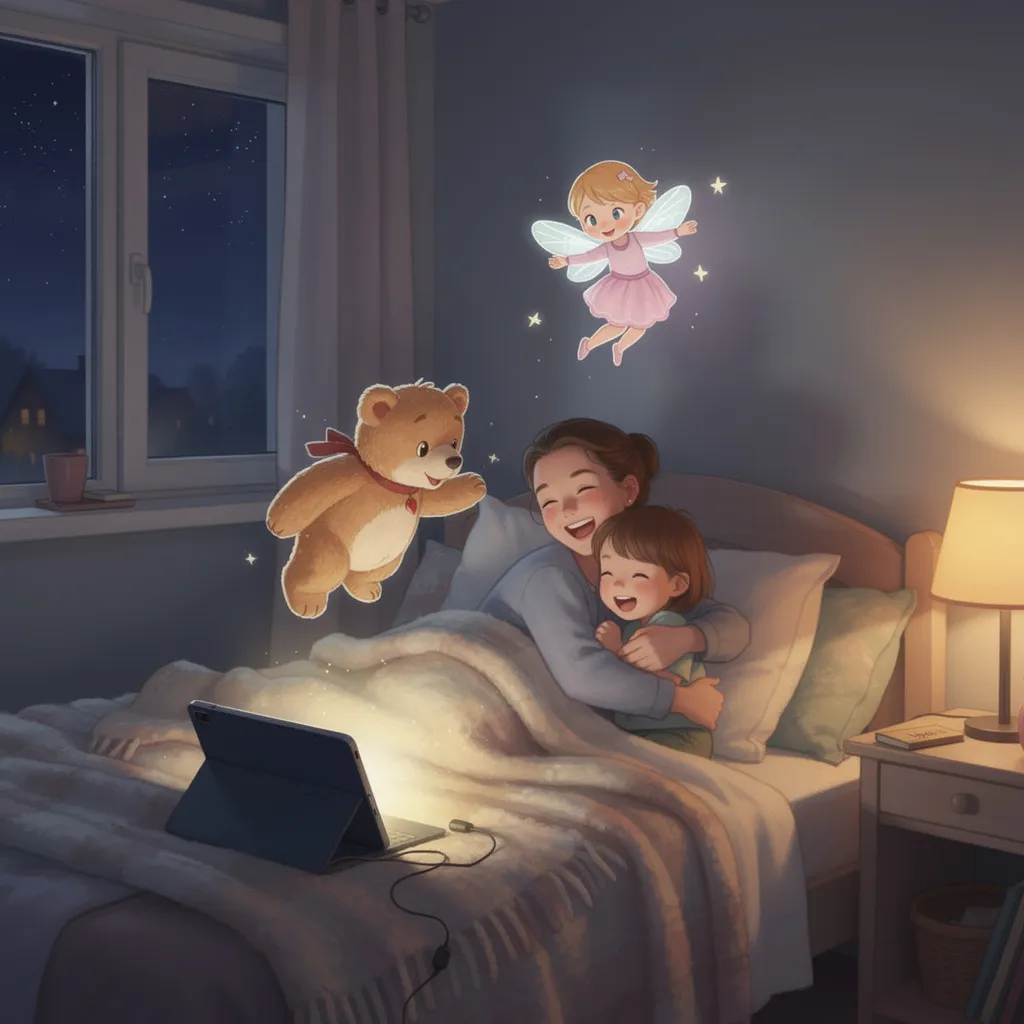
The goal isn't to eliminate screens - it's to use them intentionally. Here's a framework that works for many families: designate story time as a special, screen-positive ritual. It happens at the same time each night, it replaces aimless browsing, and it involves a parent (even if you're just sitting with your child while the story plays). This teaches children that technology can be a tool for creativity and learning, not just passive entertainment. It's a healthy relationship with screens, built from the start.
What the Research Actually Says
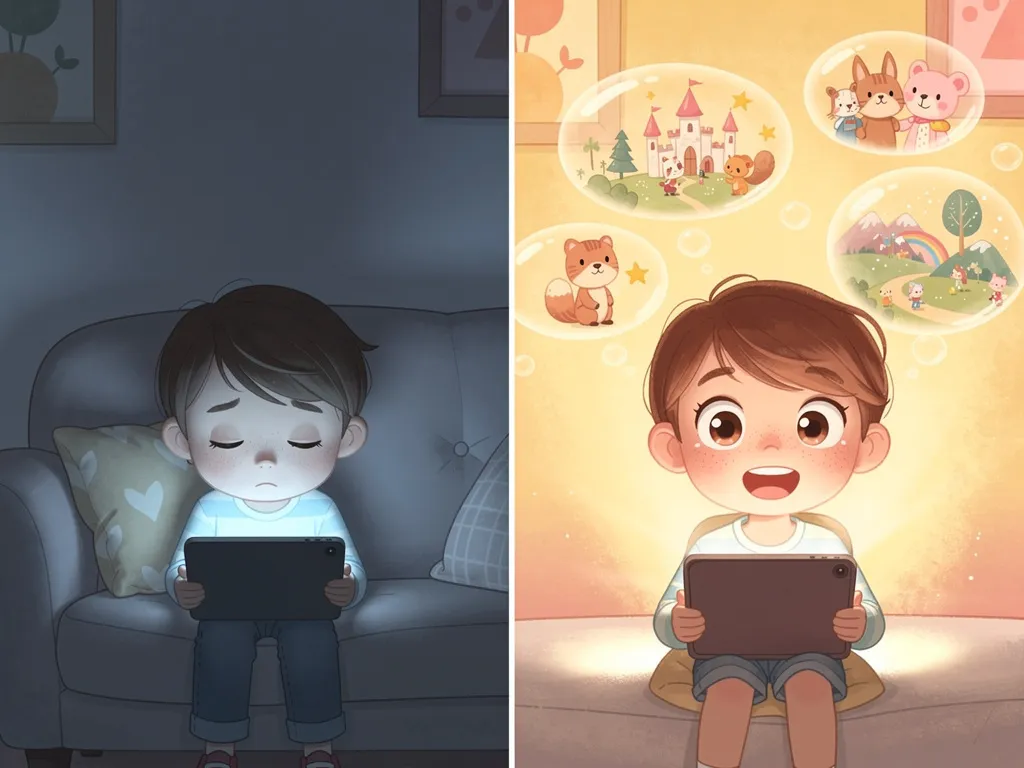
A comprehensive 2023 review in JAMA Pediatrics found that the negative effects of screen time were almost entirely associated with passive consumption - watching videos without interaction, social media scrolling, and background TV. Interactive, educational, and story-based screen activities showed neutral to positive effects on development, especially when a caregiver was involved. The takeaway? Don't count minutes. Count quality. A 20-minute personalized story that sparks conversation and imagination is worth infinitely more than a 5-minute cartoon.
Fable: Screen Time You Can Feel Good About
We built Fable specifically to be the kind of screen time parents don't have to feel guilty about. There are no ads, no autoplay loops, no algorithm pushing your child toward more and more content. You create a story, your child enjoys it, and then it's bedtime. The app encourages a single, focused storytelling experience rather than endless browsing. It's technology serving the parent, not working against them.
Frequently Asked Questions
Is using a storytelling app considered screen time?
Technically yes, but pediatricians distinguish between passive and active screen use. Interactive storytelling where a child is engaged, listening, and responding is fundamentally different from passively watching random videos. Many families count personalized story time differently than YouTube time.
What are good screen-free alternatives to tablets for kids?
Audio stories are excellent. Fable stories can be listened to with AI narration and background music without looking at a screen - perfect for car rides, bedtime, or quiet time. Printed books from digital stories also bridge the gap between screen and screen-free.
How much screen time should kids have?
The American Academy of Pediatrics recommends avoiding screens for children under 18 months (except video calls), 1 hour/day of high-quality content for ages 2-5, and consistent limits for ages 6+. The quality and type of screen use matters as much as the quantity.
I regularly share updates on what I'm building and how I'm improving Fable.
Follow me on XReady to Create Your Own Story?
Create a story in your browser, or download Fable for iOS and Android. Add your own characters, illustrations, and narration.