Fable for Business: AI Storytelling for Brands and Creators

The Oldest Marketing Strategy, Supercharged by AI
Before there were ads, before there were brands, before there were businesses - there were stories. Humans have been using stories to communicate value, build trust, and create emotional connections for thousands of years. The best marketing has always been storytelling. Nike doesn't sell shoes - they tell stories about athletes overcoming obstacles. Apple doesn't sell computers - they tell stories about creative people changing the world. Patagonia doesn't sell jackets - they tell stories about protecting the planet.
The problem has always been that good storytelling is expensive. Creating a compelling brand narrative with visuals, voice, and music used to require agencies, production teams, writers, artists, and voice actors. Small businesses and individual creators were priced out of the kind of storytelling that builds real emotional connections with audiences. You could write a blog post, sure. But a fully produced visual story with narration and music? That was enterprise territory.
AI has changed that equation completely. Tools like Fable - originally built for personalized children's stories - are proving to be remarkably versatile platforms for business storytelling. The same technology that creates a bedtime adventure for a five-year-old can create a product origin story, a customer testimonial narrative, a training scenario, or a brand values piece. The core capability is the same: turning an idea into a fully illustrated, narrated, musically scored story in minutes.
Brand Storytelling That Actually Connects
Most brand content fails because it tells people what to think instead of making them feel something. "Our product is the best" doesn't create connection. "Here's the story of how our product changed someone's life" does. But creating that kind of narrative content has traditionally required significant creative resources. You needed a writer, an illustrator or videographer, a designer, maybe a voice actor or narrator. The production pipeline was long and expensive.
With Fable, a small business owner can create a visual brand story in under 5 minutes. Imagine a local bakery creating a narrated illustrated story about how their grandmother's recipe traveled from Italy to their small town kitchen. Or a fitness coach creating a story about a client's journey from self-doubt to completing their first marathon. Or an environmental nonprofit creating a story about a single seed growing into a forest. These are the kinds of stories that make people care about your brand, and now anyone can create them without hiring a creative team.
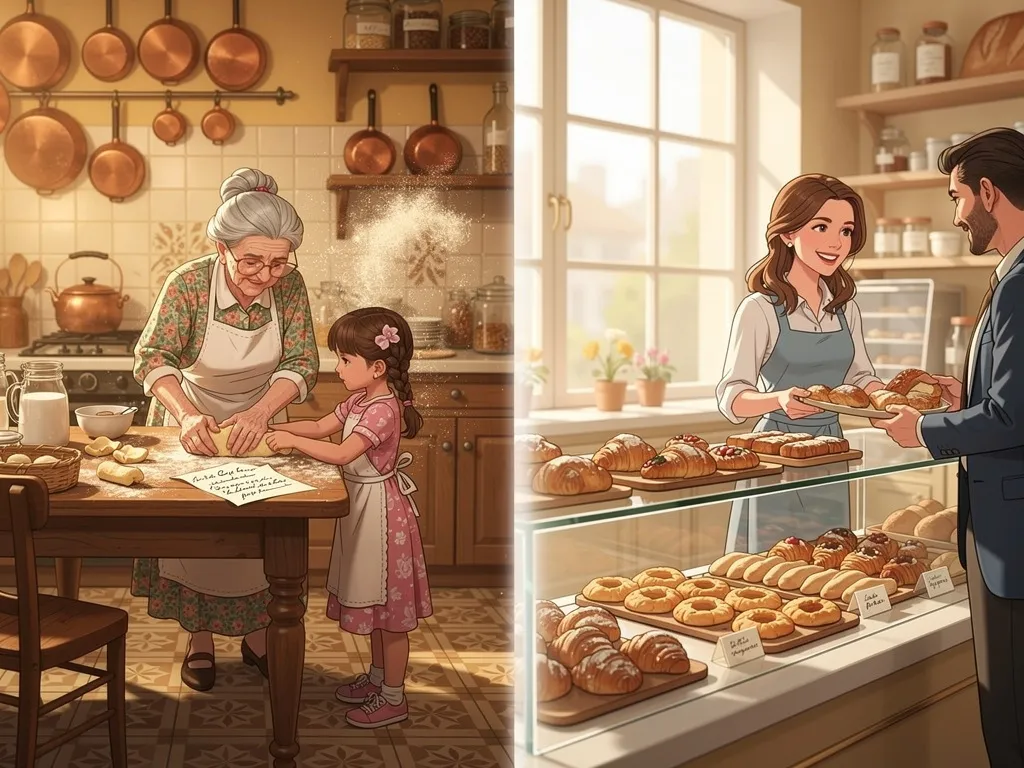
Visual storytelling creates emotional connections that text alone can't match. When your brand story has consistent character illustration, expressive narration, and mood-matched music, it transforms from content into an experience. That's the difference between a customer reading about your brand and a customer feeling your brand.
Content Marketing at Scale
Content creators know the grind. You need to produce consistently, across multiple platforms, with enough variety to keep audiences engaged but enough consistency to maintain your brand identity. It's exhausting, even for teams. For solo creators, it can feel impossible. AI storytelling offers a way to create rich, engaging content at a pace that actually keeps up with modern content demands.
Think about the types of content you could create with an AI storytelling tool. Product launch narratives that show your product solving a real problem in a real scenario. Customer success stories illustrated with engaging visuals. Explainer content that walks viewers through complex concepts using narrative and metaphor. Behind-the-scenes stories about your process, your team, your values. Seasonal or topical content that ties your brand to current conversations. Each of these traditionally required significant production effort. With Fable, each one takes minutes.
And the output isn't just text on a screen. It's a fully produced piece of content with illustrations, narration, and music. That's the kind of content that stops a scroll. That gets shared. That gets remembered. In a content landscape where everyone is competing for attention, the brands that tell the best stories win - and AI has just made it possible for every brand, regardless of size or budget, to tell great stories.
Training and Internal Communication
Here's an application that most people don't think about: training materials. If you've ever sat through a corporate training presentation, you know the problem. Bullet points. Stock photos. A monotone narrator reading slides. Nobody learns anything because nobody's engaged. Now imagine replacing that with a narrated, illustrated story that walks a new employee through a realistic scenario they'll encounter on the job. Instead of reading a policy about customer service, they experience a story about a character handling a difficult customer interaction.
Scenario-based training is well established as more effective than traditional instruction, but it's always been expensive to produce. AI storytelling makes it practical for businesses of any size. A restaurant owner can create training stories about handling common kitchen situations. A retail manager can create stories about different customer interaction scenarios. A healthcare administrator can create stories about patient communication best practices. Each story takes minutes to create and can be updated or replaced just as quickly as situations change.
Individual Creators and Side Projects

For individual creators - YouTubers, podcasters, newsletter writers, social media creators - AI storytelling opens up an entirely new content format. You can create illustrated, narrated stories as standalone content or as segments within your existing content. A history creator can bring historical events to life with visual narratives. A science communicator can explain complex concepts through story. A lifestyle creator can share personal experiences as produced visual stories.
The creator economy thrives on differentiation, and most creators are stuck using the same formats as everyone else - talking head videos, text posts, podcast episodes. AI storytelling gives you a format that almost nobody else is using yet. A narrated, illustrated story stands out in any feed, on any platform. It's novel, it's engaging, and it demonstrates a level of creative ambition that audiences respond to. Early adopters of any new content format tend to see outsized results, and we're still in the very early days of AI storytelling as a content medium.
How to Get Started With Business Storytelling
The barrier to entry is essentially zero. If you can describe a story in a sentence, you can create business content with Fable. Start with something simple - your brand origin story, a customer success story, or a product explainer. Describe the scenario, set the tone, and let Fable generate a fully produced narrative. Review it, see what works, iterate on what doesn't. Within an hour, you'll have a sense for how to use the tool effectively and you'll probably have two or three pieces of content that are ready to share.
The businesses and creators who will win the next decade of content marketing are the ones who can tell compelling stories consistently and affordably. AI storytelling tools make that possible for everyone - not just the brands with the biggest budgets. Whether you're a solo entrepreneur, a small team, or a large organization looking for more efficient content production, the fundamentals are the same: tell stories that make people feel something, and tell them often. Fable makes both of those things easier than they've ever been.
Frequently Asked Questions
Can businesses use AI storytelling for marketing?
Yes. AI storytelling can create personalized brand narratives, training materials, onboarding stories, and customer engagement content. The personalization that works for children's stories - making the audience the hero - applies equally to business storytelling.
What is an AI storytelling platform?
An AI storytelling platform uses artificial intelligence to generate complete narratives with text, illustrations, narration, and other media. Fable is one example focused on personalized stories. The underlying technology can be applied to business, education, and entertainment contexts.
How can AI help with content creation?
AI accelerates content creation by generating first drafts, illustrations, narration, and video from simple text prompts. What used to take a team of writers, illustrators, and voice actors can now be prototyped in minutes. The human still provides creative direction and quality control.
I regularly share updates on what I'm building and how I'm improving Fable.
Follow me on XReady to Create Your Own Story?
Create a story in your browser, or download Fable for iOS and Android. Add your own characters, illustrations, and narration.